
This month’s blog was inspired by a great question from a client who had just been exploring my Patreon:
“Why are the lessons all audio, with no video demonstrations?”
If you’re curious, you can try a free lesson “Lifting and Translating the Head” on my Patreon to get a direct experience of what she was referring to.
In Feldenkrais Awareness Through Movement® lessons, teachers don’t demonstrate movements.
For many people, this feels unfamiliar at first—especially if you’re used to yoga or Pilates classes where the teacher shows you exactly what to do.
But in Feldenkrais, this isn’t a limitation. It’s a deliberate and powerful part of the method.
So why?
Awareness
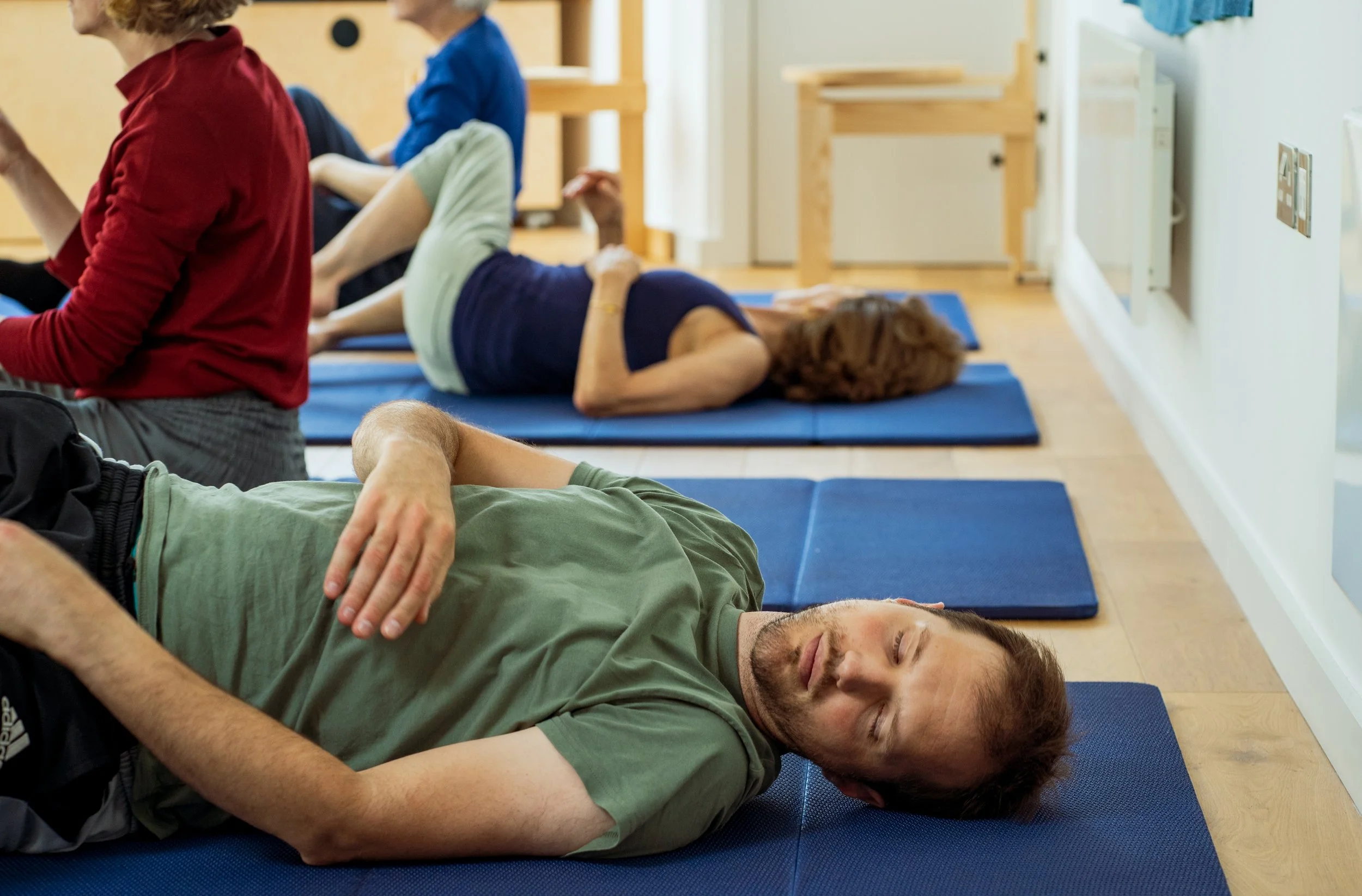
The simplest answer is awareness.
When you’re not trying to copy a shape, your attention naturally turns inward.
Instead of asking, “Am I doing this right?” you begin to ask, “What do I feel?”
In practice, this means following the words and noticing your own experience—your sensations, your movement, and your responses.
The inner conversation
You might recognise this inner dialogue from a typical movement class:
“I’m not sure if I’m doing this right.”
“Their leg goes much higher than mine…”
“If I try that, I might hurt my back.”
“The teacher probably thinks I’m useless.”
There’s comparison, self-criticism, distraction, and concern about how things look.
Without a demonstration to copy, much of that begins to fall away, leaving you with your own experience. And that’s where real learning happens.
Learning like a baby
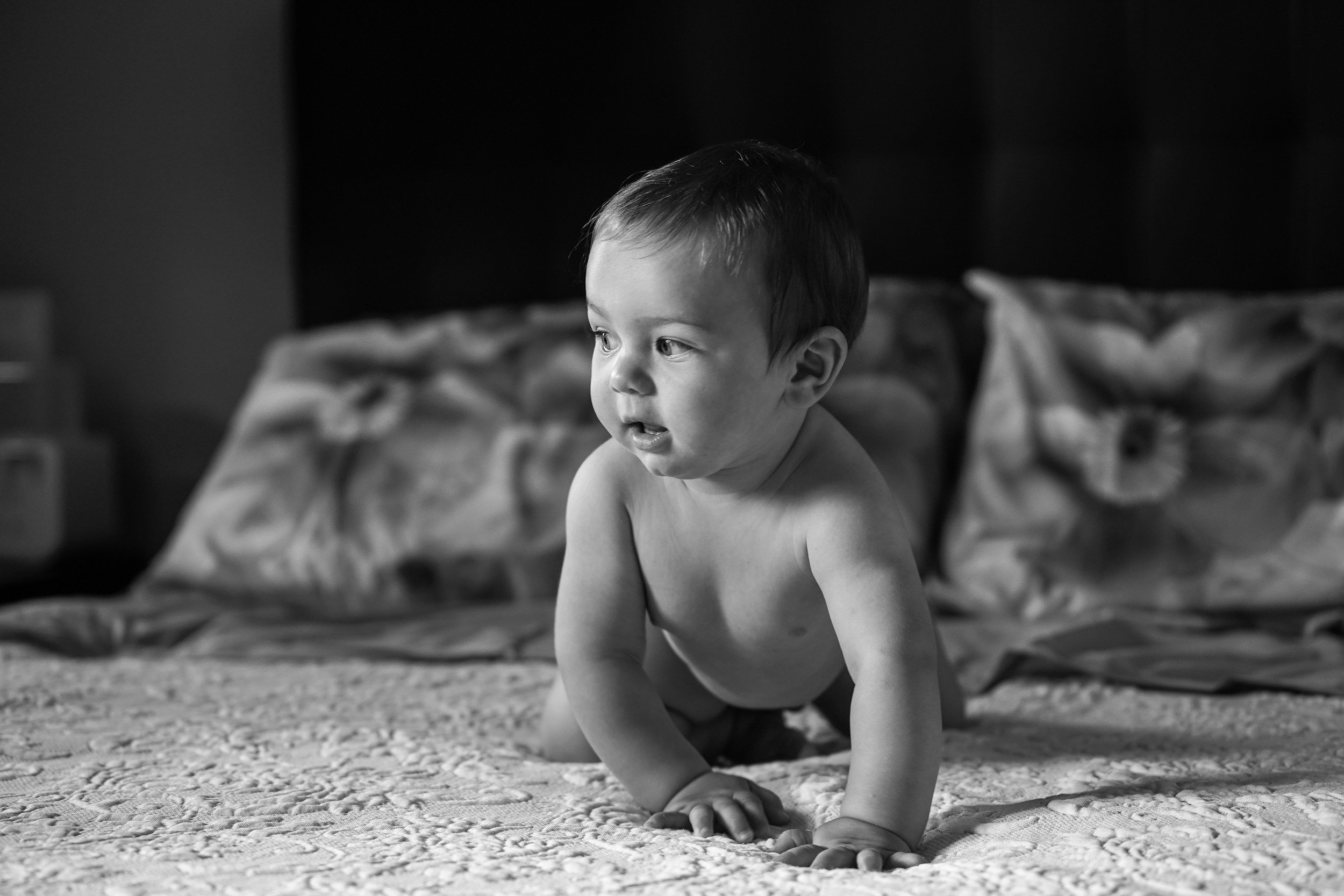
ATM invites you to learn the way you did as a child.
A baby doesn’t learn to walk by copying an adult. They learn by sensing, experimenting, falling, adjusting, and trying again.
Over and over.
It might look messy, but it’s deeply effective. This is learning through direct experience, not imitation.
A guided process
An Awareness Through Movement® lesson is more like a guided exploration than a performance.
The teacher offers clear instructions, rephrases when needed, and creates a safe structure for learning. You interpret the movement in your own way, noticing sensations like effort, contact with the floor, or differences between one side and the other.
At the same time, you might become aware of your thoughts drifting, or emotions arising, and gently bring your attention back to the movement.
There’s no single “correct” version to match—only your experience.Letting go of the adult mind
Like a baby, we are asked to let go of the part of the mind that judges, criticises, and compares us to others.
Babies don’t care what they look like or how high their leg goes. They are guided by a far greater purpose: reaching for a toy, moving towards freedom, and developing independence.
Letting go of getting it right
Not knowing if you’re doing it “correctly” isn’t a problem. It’s part of the process.
If we always aim to get things right, we tend to repeat familiar patterns. But when we allow a bit of uncertainty, something new can emerge.
In Feldenkrais, success isn’t measured by how something looks. It’s measured by what you notice, what changes, and what becomes easier. You can read more about this in my blog called “Please Don’t Be Good at It! Why Feeling Frustrated in a Learning Environment Is Actually the Best Place to Be.”
Interpretation matters
It’s natural for the adult mind to want reassurance—to do well, to get it right, or to be approved of.
But Feldenkrais offers a different perspective.
As a teacher, I provide the structure and guidance. The real results come from your own attention, curiosity, and willingness to explore.
That’s where changes in ease, balance, and coordination begin.
Not knowing is part of the process
How can we discover something new if we keep repeating what’s familiar?
Not quite knowing is what opens the door to discovery.
Just like a child trying a new food, we have to trust the process enough to experience it for ourselves.
Getting it “right” isn’t the goal. Having a new experience is.
It translates well online
One of the beauties of this audio-only approach is how well it translates to an online setting.
Many of my clients find it very helpful to join classes via Zoom. As long as their camera is positioned so I can see enough of their movement, they can still have a valuable and enriching learning experience.
For people with mobility issues in particular, this can be hugely beneficial—they don’t need to travel to a venue. They can learn and move in the comfort of their own home.
Learning through recordings
It’s also through this experience that I’ve built a beautiful collection of lesson recordings.
Of course, following an audio recording of a live lesson is slightly different from attending in person. The instructor isn’t able to tailor their cues and instructions to what they are seeing in real time.
However, for many people, these recordings can be a wonderful way to deepen their learning:
revisiting a lesson to discover something new
reliving the experience from a different perspective
or simply giving themselves a reset—bringing more comfort, ease, and mobility into their lives
A final thought
At the beginning, we touched on that part of us that wants reassurance—that wants to know we’re doing it right, that looks for something to copy, something to hold on to.
That’s the “adult brain”—the part that compares, judges, and often feels like it needs to be guided step by step.
But underneath that, there’s another way of learning available to us.
A more curious, open, and trusting state—closer to how we learned as children.
A child doesn’t need to be shown everything. They don’t worry about getting it right. They explore, they sense, they try, and they trust the process.
Awareness Through Movement invites us back to that way of learning.
Not through copying, but through curiosity.
Not through striving, but through sensing.
And in doing so, we often discover that we don’t need to be shown what to do quite as much as we thought.
We just need the space—and the attention—to find it for ourselves.
If you’d like to explore further
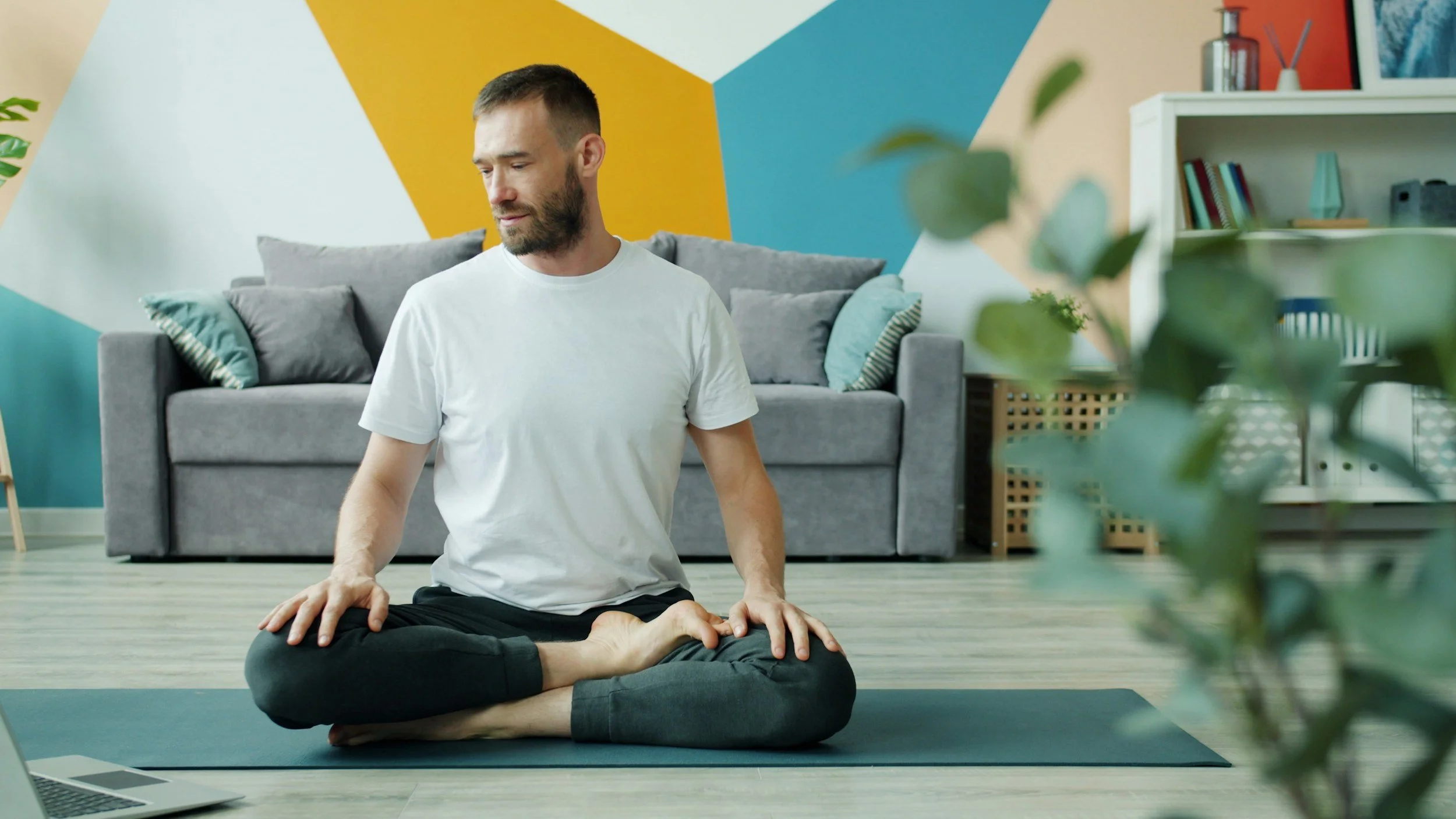
If this way of learning speaks to you, I share a growing library of guided audio lessons on my Patreon.
These are recordings of real classes, designed to help you slow down, reconnect with yourself, and explore movement in your own time and space.
Whether you’re completely new to Feldenkrais or looking to deepen your practice, it’s a simple way to bring more ease, awareness, and comfort into your everyday life.